Cinemaazi remembers Kazi Nazrul Islam on his birth anniversary
24 May 1899
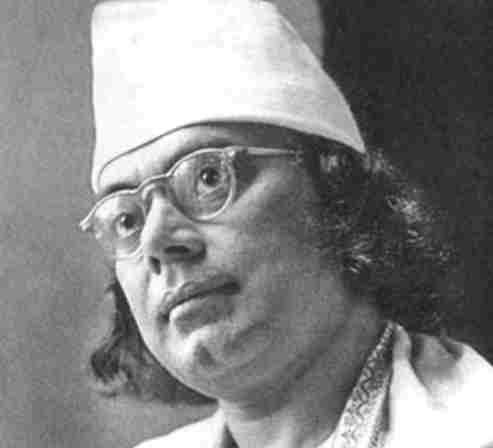
One of the most singularly influential poets and staunch critique of fundamentalism and oppression, Kazi Nazrul Islam also known as Bidrohi Kabi was born on 24 May, 1899. Noone except Rabindranath Tagore can claim to have exerted as much influence on Bengali music as he did. His compositions and lyrics were also hugely influential on the tradition adopted by the IPTA. This influence extended to the Bangladesh Liberation War, as his radical nationalist writings were considered deeply inspirational. His nationalist writings for the journal Dhoomketu led to repeated imprisonment and also a charge of sedition.
Trained in Islamic philosophy as a young man, Nazrul was deeply attracted to theatre, even joining a theatre troupe. He expanded his horizons by studying Bengali and Sanskrit literature as well as Hindu scriptures. He began by writing plays, before moving on to poetry and prose. He even had as stint in the British Indian Army. After settling in Calcutta, his writing flourished, even though he faced criticism for his unorthodox writing style. Bidrohi (1922) was the breakthrough work of his career and still the poem that he is most associated with. His ghazals, and addresses to Kali were hugely influential. His nearly 4000 songs are collectively called Nazrul Geeti, one of the major schools of Bengali music. He also faced attacks from both Hindu and Muslim fundamentalists due to his radical views on religion. He faces charges of sedition in 1930 for the book Pralayshikhm.
He became one of the first composers to sign a contract with a major record company. This opened the doors of opportunity for other composers as well. In the sphere of cinema some sources credit him as the director of Dhruba Bhakta (1934). He had started a production company called Bengal Tiger Pictures with another famous music personality, Abbasuddin Ahmed. Their film which was an adaptation of Nazrul Islam's novel Madina remained unfinished. Other than this he is credited as a composer for Gora (1938), as the writer for New Theatre's Bidyapati (1937) and the lyricist for Nandini (1941) and Dikshul (1943). Vidyapati had been adapted from his play. He also composed for several important theatrical productions.
He suffered from a neuro-degenerative disease called Morbus Pick from the age of 43. Later in his life he had moved to Dhaka where he passed away in 1976.
Trained in Islamic philosophy as a young man, Nazrul was deeply attracted to theatre, even joining a theatre troupe. He expanded his horizons by studying Bengali and Sanskrit literature as well as Hindu scriptures. He began by writing plays, before moving on to poetry and prose. He even had as stint in the British Indian Army. After settling in Calcutta, his writing flourished, even though he faced criticism for his unorthodox writing style. Bidrohi (1922) was the breakthrough work of his career and still the poem that he is most associated with. His ghazals, and addresses to Kali were hugely influential. His nearly 4000 songs are collectively called Nazrul Geeti, one of the major schools of Bengali music. He also faced attacks from both Hindu and Muslim fundamentalists due to his radical views on religion. He faces charges of sedition in 1930 for the book Pralayshikhm.
He became one of the first composers to sign a contract with a major record company. This opened the doors of opportunity for other composers as well. In the sphere of cinema some sources credit him as the director of Dhruba Bhakta (1934). He had started a production company called Bengal Tiger Pictures with another famous music personality, Abbasuddin Ahmed. Their film which was an adaptation of Nazrul Islam's novel Madina remained unfinished. Other than this he is credited as a composer for Gora (1938), as the writer for New Theatre's Bidyapati (1937) and the lyricist for Nandini (1941) and Dikshul (1943). Vidyapati had been adapted from his play. He also composed for several important theatrical productions.
He suffered from a neuro-degenerative disease called Morbus Pick from the age of 43. Later in his life he had moved to Dhaka where he passed away in 1976.