indian cinema heritage foundation

on this day

16April
16 Apr 1967

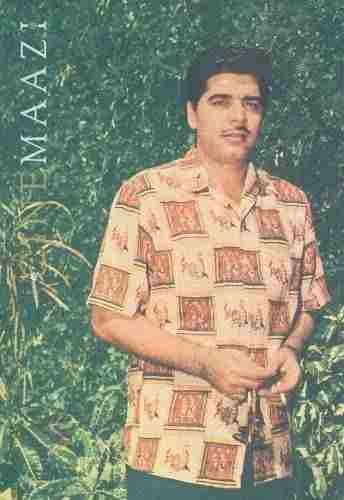
Cinemaazi remembers Shahid Lateef on his death anniversary

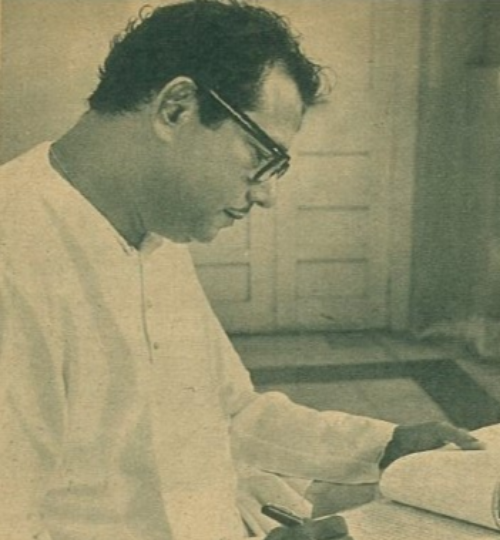
Cinemaazi remembers director-writer-producer Shahid Lateef on his death anniversary. Lateef started his career with Bombay Talkies, writing dialogues for the films Naya Sansar (1941), Anjan (1941) and Jhoola (1941).  Lateef’s film Ziddi (1948) launched the career of Dev Anand. The script of Ziddi was based on a story by the popular writer Ismat Chughtai, who was also married to Shahid Lateef. The husband-wife duo...
read more
Cinemaazi remembers director-writer-producer Shahid Lateef on his death anniversary. Lateef started his career with Bombay Talkies, writing dialogues for the films Naya Sansar (1941), Anjan (1941) and Jhoola (1941). 

Lateef’s film Ziddi (1948) launched the career of Dev Anand. The script of Ziddi was based on a story by the popular writer Ismat Chughtai, who was also married to Shahid Lateef. The husband-wife duo worked together on many films where Ismat alternated between the roles of writer and producer. The poet-lyricist Kaifi Azmi started his career with Shahid Lateef’s film Buzdil (1951). Shahid Lateef’s other films include Shikayat (1948), Arzoo (1950), Sheesha (1952), Fareb (1953) and Picnic (1966). 

 
read less
16 Apr 1933

Cinemaazi wishes Enoch Daniels a very happy birthday

Enoch Daniels wore many hats as a pianist, accordion player, and music arranger. He was born on this day in 1933 to a Catholic family in Pune. Both his family and the church played a significant role in forming his interest in music in his early years of childhood. In 1955, he moved to Bombay and struck his luck when he got to perform alongside Van Shipley across the nation and the globe. Daniels can be credited for popularizing the accordion her...
read more

Enoch Daniels wore many hats as a pianist, accordion player, and music arranger. He was born on this day in 1933 to a Catholic family in Pune. Both his family and the church played a significant role in forming his interest in music in his early years of childhood. In 1955, he moved to Bombay and struck his luck when he got to perform alongside Van Shipley across the nation and the globe. Daniels can be credited for popularizing the accordion here. He also worked in the troupe of renowned music composers like Shankar Jaikishan, Salil Chowdhury, S D Burman, Khayyam, and N Dutta. He worked as an arranger in popular films such as Pinjra (1972), Kabie Kabhie (1976) Choti Si Baat (1976), and Gauri (1986). Cinemaazi wishes him on his birthday!

Image courtesy: enochdaniels.com

read less
16 Apr 1927

Cinemaazi remembers the actor-singer Moti Sagar on his birth anniversary

Cinemaazi remembers the actor-singer Moti Sagar on his birth anniversary. Moti Sagar started his career as a second lead in Malhar (1951) and went on to act in a number of films like Gul Sanobar (1953), Jai Mahadev (1955), Diwali Ki Raat (1956), Makkhee Choos (1956) and Flying Horse (1963).  Moti Sagar’s first film song was a duet with Indrani for Gul Sanobar. He also sang for films like Pamposh (1953), Jai Mahadev (1955), S...
read more
Cinemaazi remembers the actor-singer Moti Sagar on his birth anniversary. Moti Sagar started his career as a second lead in Malhar (1951) and went on to act in a number of films like Gul Sanobar (1953), Jai Mahadev (1955), Diwali Ki Raat (1956), Makkhee Choos (1956) and Flying Horse (1963). 
Moti Sagar’s first film song was a duet with Indrani for Gul Sanobar. He also sang for films like Pamposh (1953), Jai Mahadev (1955), Shikar (1955), Diwali Ki Raat (1956), Meri Bahen (1962) and Flying Horse (1963). 
His song Bahar dekh ke dil aur bekarar hua, a duet with Sudha Malhotra in Shikar (1955), became immensely popular with the film-going audience. His solo Woh saamne aaye mere in the same film is also one of his best-known songs. 
With Baadal (1985), Moti Sagar tried his hand at production as well. The previous year, he had written and directed the film Prerana (1984). He passed away on 15 March 1999 in Mumbai. 
read less
16 Apr 1923

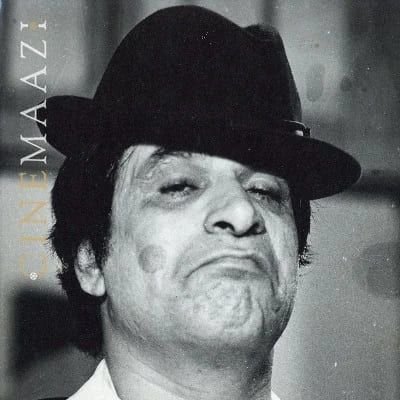
Cinemaazi remembers Pran Mehra on his birth annversary

Cinemaazi remembers Pran Mehra, a celebrated editor of Hindi cinema. A stylish, handsome man, Pran worked with B.R. Chopra early in his career for the film Afsana(1951), which led to a continued collaboration between the two. Mehra was honoured with the Filmfare Award for Best Editing for Gumrah (1963) in 1964.  Mehra frequently worked with Yash Chopra for films like Ittefaq(1969), Waqt (1965), Deewaar(1975) and Kabhie Kabhie(1976)....
read more
Cinemaazi remembers Pran Mehra, a celebrated editor of Hindi cinema. A stylish, handsome man, Pran worked with B.R. Chopra early in his career for the film Afsana(1951), which led to a continued collaboration between the two. Mehra was honoured with the Filmfare Award for Best Editing for Gumrah (1963) in 1964. 

Mehra frequently worked with Yash Chopra for films like Ittefaq(1969), Waqt (1965), Deewaar(1975) and Kabhie Kabhie(1976). He appeared onscreen in a small role in Waqt

Mehra’s talent was also sought out by other filmmakers of the time like Lekh Tandon, P.L. Santoshi, Raj Tilak and Shakti Samanta. He passed away on 6 November 1978, leaving behind an impressive legacy. 

 
read less
16 Apr 1919

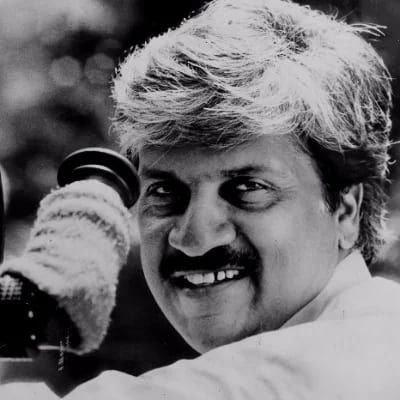
Cinemaazi remembers Ravindra Dave on his birth anniversary

Today marks the birth anniversary of filmmaker Ravindra Dave, who directed approximately 30 films and also introduced many gifted talents to the big screen. Active in cinema in the early 1950s to late 60s, he is known for films such as Nagina (1951), Agra Road (1957), Post Box 999 (1958), Satta Bazaar (1959), Dulha Dulhan (1964), and Raaz (1967). Born in Karachi on 16 April, 1919, he was mentored by his maternal uncle and popular film producer, D...
read more
Today marks the birth anniversary of filmmaker Ravindra Dave, who directed approximately 30 films and also introduced many gifted talents to the big screen. Active in cinema in the early 1950s to late 60s, he is known for films such as Nagina (1951), Agra Road (1957), Post Box 999 (1958), Satta Bazaar (1959), Dulha Dulhan (1964), and Raaz (1967). Born in Karachi on 16 April, 1919, he was mentored by his maternal uncle and popular film producer, Dalsukh Pancholi. Just 14 when he started off as a Production Manager of Punjabi films under the guidance of Pancholi, Ravindra learnt the ropes and was just 23 when his uncle assigned him the direction of Poonji (1943). Co-directed by Vishnu R Patil, the film was a huge hit. Dave went on to deliver fairly good films in different genres. He was, however, the expert when it came to murder mysteries, which led to his being dubbed the Alfred Hitchcock of India. After a long and successful innings in Hindi films, he enjoyed further success in Gujarati cinema, delivering hits such as Raja Bharathari (1973), Hothal Padmani (1974), Kunvarbai nu Mameru (1974), and many more. Ravindra Dave passed away in 1992.
read less
16 Apr 1917

Cinemaazi remembers Bekal Amritsari on his birth anniversary

Cinemaazi remembers Bekal Amritsari, born as Baldev Chander Bekal Amritsari on his birth anniversary (16 April 1917), renowned poet, lyricist, screenplay writer and filmmaker of 1940s-50s. In some movies, he is credited as B.C. Bekal Amritsari as a reference to the initials of his name.  Bekal started his career in Lahore writing songs for Punjabi movies like Laila Majnu (1940), Mera Punjab (1940), Mera Mahi(1941), Gowandhi (1942) and Rav...
read more
Cinemaazi remembers Bekal Amritsari, born as Baldev Chander Bekal Amritsari on his birth anniversary (16 April 1917), renowned poet, lyricist, screenplay writer and filmmaker of 1940s-50s. In some movies, he is credited as B.C. Bekal Amritsari as a reference to the initials of his name. 

Bekal started his career in Lahore writing songs for Punjabi movies like Laila Majnu (1940), Mera Punjab (1940), Mera Mahi(1941), Gowandhi (1942) and Ravi Paar(1942). 
He moved to Calcutta from Lahore, and penned the lyrics for a number of popular songs. Both of KL Saigal’s Punjabi songs were written by Amritsari. Bekal wrote the well-known songs Durdesh kareh newala and Kuch yaad rahe toh sun karja forJawab (1942). He also wrote for films like Mali (1944), Ramayani (1945), Mohini (1947),Birhan(1948) and Chhoti Duniya (1953). 

Bekal Amritsari was also a screenwriter, story writer and dialogue writer for movies like Birhan (1948),Jaggu(1952), Miss Coca Cola (1955), Hazaar Pariyan (1959) and Bahadur Lutera(1960). Meanwhile, he remained active in Punjabi films as well. He wrote the lyrics and the story for Chaudhary Karnail Singh (1960). He also wrote the script for the cult classic Punjabi film Nanak Naam Jahaz Hai(1969), which won the National Film Award for best Punjabi feature film in the year 1970. The music director of the film, S. Mohinder, was honoured with the National Film Award for Best Music Direction. 

Bekal Amritsari passed away in 1982. 

 
read less
15April
15 Apr 2020

Cinemaazi remembers Ranjit Chowdhry on his death anniversary

One of the first Indian actors to make a mark in diaspora cinema in the West, Ranjit Chowdhry also made memorable appearances in middle cinema in the late 70s.
15 Apr 2019

Cinemaazi remembers Jawahar Kaul on his death anniversary

Cinemaazi remembers the actor Jawahar Kaul on his first death anniversary. His films include classics like Pehli Jhalak (1954), Sheesh Mahal (1950), Bhabhi (1957), Kath Putli (1957), Papi (1953), Dekh Kabira Roya (1957) and Sahib Bibi Aur Ghulam (1962).   
Cinemaazi remembers the actor Jawahar Kaul on his first death anniversary. His films include classics like Pehli Jhalak (1954), Sheesh Mahal (1950), Bhabhi (1957), Kath Putli (1957), Papi (1953), Dekh Kabira Roya (1957) and Sahib Bibi Aur Ghulam (1962). 

 
15 Apr 2007

Cinemaazi remembers W Z Ahmed on his death anniversary

Remembering W Z Ahmed, one of the prominent filmmakers of the subcontinent, on the occasion of his death anniversary today. Born in Gujarat in 1916, he started off penning dialogues for Kumkum The Dancer (1940) and Raj Nartaki (1941). He went on to produce and direct Ek Raat (1942), Man Ki Jeet (1944), Prem Sangeet (1943), Prithviraj Samyukta (1946), and Meera Bai (1947). Owner of Pune’s Shalimar Pictures, as well as another studio in Madra...
read more
Remembering W Z Ahmed, one of the prominent filmmakers of the subcontinent, on the occasion of his death anniversary today. Born in Gujarat in 1916, he started off penning dialogues for Kumkum The Dancer (1940) and Raj Nartaki (1941). He went on to produce and direct Ek Raat (1942), Man Ki Jeet (1944), Prem Sangeet (1943), Prithviraj Samyukta (1946), and Meera Bai (1947). Owner of Pune’s Shalimar Pictures, as well as another studio in Madras, Ahmed was known to employ famous poets and writers of the Progressive Writers Association, such as Josh Malihabadi and Ramanand Sagar. Settling in Pakistan post Partition, he made two films, Roohi (1954) and Wada (1957); his third film Wafa Ki Ada remained incomplete. Interestingly, Roohi was the first film to be banned in Pakistan on the grounds that it promoted class hatred; the ban was later revoked in 1954. Wada won him the Nigar Award for Best Director. He remained a prominent cultural figure in Pakistan until his death on 15 April, 2007.
read less
15 Apr 1922

Cinemaazi remembers Hasrat Jaipuri on his birth anniversary

One of the best writers of romantic songs in Hindi cinema, Hasrat Jaipuri was born on this day in 1922. Part of Raj Kapoor's dream team with fellow lyricist Shailendra, Jaipuri was also a formidable talent on his own.
15 Apr 1912

Cinemaazi remembers G V Wategaonkar on his birth anniversary

Born on this day in 1912, G V Wategaonkar has made a significant contribution to Hindi cinema as an art director. Some of his noteworthy films are Rukmani Swamyamvar (1946), Bari Bahen (1949), Rail Ka Dibba (1953), and Beti (1957). 
15 Apr 1907

Cinemaazi remembers Ambalal J Patel on his birth anniversary

Born on this day in 1907, Ambalal J Patel was a pioneering figure in the technology of film processing, founding the influential Film Center in 1946. Cinemaazi remembers him on his birth anniversary.
14April
14 Apr 2013

Cinemaazi remembers P B Sreenivas on his death anniversary

Renowned singer P B Sreenivas passed away on this day in 2013. Other than Kannada he also sang in Tamil, Telugu, Hindi, Malayalam, Tulu and Konkani. Born in Kakinada, Andhra Pradesh, he took inspiration from his mother who was a singer herself. Growing up, Mohammed Rafi was his favourite singer. He got his first chance to sing in a play at the age of 12. His film debut came in Mr Sampat (1952). He would go on to become the voice of the Kannada...
read more

Renowned singer P B Sreenivas passed away on this day in 2013. Other than Kannada he also sang in Tamil, Telugu, Hindi, Malayalam, Tulu and Konkani. Born in Kakinada, Andhra Pradesh, he took inspiration from his mother who was a singer herself. Growing up, Mohammed Rafi was his favourite singer. He got his first chance to sing in a play at the age of 12.

His film debut came in Mr Sampat (1952). He would go on to become the voice of the Kannada superstar Dr Rajkumar, delivering hit after hit in his films. He was known for his collaborations with M S Baburaj and G Devarajan. He was also a poet and wrote two ghazals for Nandu (1981). 

He has been felicitated with the Kannada Rajyothsava Award, the Kalaimamani Award, and the Karnataka Nafija Award.

read less
14 Apr 1986

Cinemaazi remembers Nitin Bose on his death anniversary

One of the most influential directors of all time, Nitin Bose's films were known for their technical polish and deftly handled narratives. From making some New Theatres's greatest hits to being a mentor figure to Dilip Kumar, he had a stellar and storied career.
14 Apr 1922

Cinemaazi remembers Ustad Ali Akbar Khan on his birth anniversary

Today marks the birth anniversary of Padma Vibhushan-awardee Ustad Ali Akbar Khan. Noted music composer, sarod player, and teacher, he presented classical Indian music to the West. Born 14 April, 1922, he received his training from his father, maestro Alauddin Khan. Performing from the age of 13, he went on to become the court musician to the maharaja of Jodhpur for seven years. Conferred the title Ustad or master musician by the state, his fame...
read more

Today marks the birth anniversary of Padma Vibhushan-awardee Ustad Ali Akbar Khan. Noted music composer, sarod player, and teacher, he presented classical Indian music to the West. Born 14 April, 1922, he received his training from his father, maestro Alauddin Khan. Performing from the age of 13, he went on to become the court musician to the maharaja of Jodhpur for seven years. Conferred the title Ustad or master musician by the state, his fame grew when he was invited by renowned violinist Yehudi Menuhin to New York City in 1955. Many performances and recordings followed in the West, where he also often performed with his brother-in-law, famous composer and sitarist Ravi Shankar. Invited to compose music for films, Ustad Ali Akbar Khan scored the music for Chetan Anand's Aandhiyan (1952), Satyajit Ray’s Devi (1960), Tapan Sinha's Kshudito Pashan (Hungry Stones, 1960), and the Ismail Merchant-James Ivory production The Householder (1963), for which he won the Best Musician of the Year award. Khan also played the sarod for a song in the film Seema (1955), as well as composed some of the music for Bernardo Bertolucci's Little Buddha (1993). Ustad Ali Akbar Khan passed away in 2009.


read less
14 Apr 1921

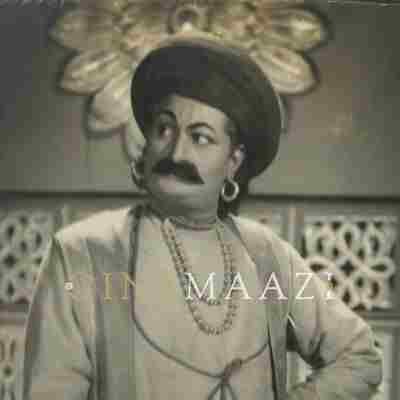
Cinemaazi commemorates Subodh Mukherjee on his birth annversary

Cinemaazi remembers the veteran film maker Subodh Mukherjee, on his birth anniversary (14/04). He raised the Hindi film industry to new heights in the 1960s-70s with the melodious music in his box office hits like Junglee (1961), Love Marriage (1959), April Fool (1964), Shagird (1967), Mr. Romeo (1974) and Sharmeelee (1971).  He got his first break as a director with Paying Guest(1957) but left the film midway to direct Munimji (1955), wh...
read more
Cinemaazi remembers the veteran film maker Subodh Mukherjee, on his birth anniversary (14/04). He raised the Hindi film industry to new heights in the 1960s-70s with the melodious music in his box office hits like Junglee (1961), Love Marriage (1959), April Fool (1964), Shagird (1967), Mr. Romeo (1974) and Sharmeelee (1971). 

He got his first break as a director with Paying Guest(1957) but left the film midway to direct Munimji (1955), which was released prior to Paying Guest. The rest, as they say, is history. 

He introduced Saira Banu in the lead role in the film Junglee and Rakhee in Sharmeelee

 
read less
14 Apr 1919

Cinemaazi remembers Shamshad Begum on her birth anniversary

Cinemaazi celebrates Shamshad Begum, one of the first female playback singers in Hindi cinema, on her birth anniversary. She was in great demand throughout the 1940s and remained popular even as Lata Mangeshkar became the dominant playback singer 1950s onwards.  Shamshad Begum was born on April 14, 1919 in Lahore. One of 12 children of orthodox Muslim parents, she displayed a talent for singing at an early age. Ghulam Haider gave her a br...
read more
Cinemaazi celebrates Shamshad Begum, one of the first female playback singers in Hindi cinema, on her birth anniversary. She was in great demand throughout the 1940s and remained popular even as Lata Mangeshkar became the dominant playback singer 1950s onwards. 

Shamshad Begum was born on April 14, 1919 in Lahore. One of 12 children of orthodox Muslim parents, she displayed a talent for singing at an early age. Ghulam Haider gave her a break in films with the Punjabi film Yamla Jatt (1940), although it was Khazanchi (1941) that accelerated her career. There was no looking back after that. It is stated that she charged (what was then considered an astronomical) Rs. 1000 for one song in the 1940s! 

 
read less
14 Apr 1914

Cinemaazi remembers Shanta Hublikar on her birth anniversary.

Cinemaazi remembers Shanta Hublikar, the legendary Hindi and Marathi actress, on her birth anniversary.  Shanta Hublikar was born on 14 April 1914 in a village near Hubli. She debuted in Bhedi Rajkumar/ Thaksen Rajputra (1934) in a minor role. Her first role of import was in the film Kanhopatra (1937). She achieved the heights of stardom with her appearance in Shantaram’s Aadmi (1939). Her acting prowess as well as the songs of...
read more
Cinemaazi remembers Shanta Hublikar, the legendary Hindi and Marathi actress, on her birth anniversary. 

Shanta Hublikar was born on 14 April 1914 in a village near Hubli. She debuted in Bhedi Rajkumar/ Thaksen Rajputra (1934) in a minor role. Her first role of import was in the film Kanhopatra (1937). She achieved the heights of stardom with her appearance in Shantaram’s Aadmi (1939). Her acting prowess as well as the songs of the film became a huge hit. Her multilingual song Abkisliyekalkibaat in Hindi, Punjabi, Gujarati, Tamil, Telugu and Bengali became a landmark song.
 
Shanta Hublikar acted in a number of languages including Hindi, Marathi and Kannada—Thoratanchi Kamala (1941) and Pahila Palna (1942) in Marathi, Jeevana Nataka(1942) in Kannada and Prabhat(1941), Ghar Ki Laaj(1941), Malan (1942), Kul Kalank (1945) and Jeevan Chhaya(1946) in Hindi. 

Shanta Hublikar married Bapusaheb Geete, the proprietor of Deccan Cloth Emporium in Poona. She attempted a comeback in 1958 with Filmistan’s Saubhagyavati Bhava (1958) and Ghar Grihasthi (1958) but could not make an impact and decided to retire. She passed away on July 17, 1992. 

 
read less
14 Apr 1914

Cinemaazi remembers Khursheed Bano on her birth anniversary

Cinemaazi remembers the actress-singer Khursheed Bano on her birth anniversary. Khursheed was the heroine of several superhit films produced by Ranjit Movietone. She also acted and sang opposite K L Saigal in two films. Khursheed migrated to Karachi in Pakistan after the Partition with her husband Yusuf Bhaimia, an entrepreneur. Previously, she had been married to her manager Lala Yakub, who also dabbled in acting. He was a cruel man, and foll...
read more
Cinemaazi remembers the actress-singer Khursheed Bano on her birth anniversary. Khursheed was the heroine of several superhit films produced by Ranjit Movietone. She also acted and sang opposite K L Saigal in two films.

Khursheed migrated to Karachi in Pakistan after the Partition with her husband Yusuf Bhaimia, an entrepreneur. Previously, she had been married to her manager Lala Yakub, who also dabbled in acting. He was a cruel man, and following some differences, she divorced him. She remarried in 1956. 

Khursheed’s last film in India was Papiha Re (1948). In Pakistan, she worked in two films, Fankar (1956) and Mandi (1956). She passed away in Karachi on April 18, 2001, four days after her 87th birthday. 

 
read less
14 Apr 1891

Cinemaazi pays tribute to Dr Bhimrao Ambedkar on his birth anniversary

On the occassion of #AmbedkarJayanti2021 Cinemaazi pays tribute to the most important political figure of independent India, Dr Bhimrao Ambedkar whose life and work continue to inspire anti-caste movements across the world. Like all significant political figures, there have been several film adaptations of Dr Ambedkar's life, both fiction and non-fiction. We can look back to A V Bhashyam's Films Division documentary Babasaheb...
read more

On the occassion of #AmbedkarJayanti2021 Cinemaazi pays tribute to the most important political figure of independent India, Dr Bhimrao Ambedkar whose life and work continue to inspire anti-caste movements across the world.

Like all significant political figures, there have been several film adaptations of Dr Ambedkar's life, both fiction and non-fiction. We can look back to A V Bhashyam's Films Division documentary Babasaheb Ambedkar (1981), which combined the typical style of the Government documentary with an experimental flair. Basavaraj Kestur's 1991 Kannada film Balaka Ambedkar, Bharath Parepalli's Telugu film Dr Ambedkar (1992) and Shashikant Nalawade's Marathi language Yugpurush Dr Babasaheb Ambedkar (1993) were also made. The most famous of the adaptations is of course Jabbar Patel's National Award winning Dr Babasaheb Ambedkar (2000) which had Malayalam superstar Mammootty essaying the legendary activist. Jabbar Patel has recalled about his apprehensions regarding the scenes depicting the ideological divide between Dr Ambedkar and Mahatma Gandhi, but he was aided by Asha Parekh in getting the film cleared. Here's to hoping we see more adaptations of Ambedkar and other anti-caste activists in the future. 

Image courtesy: DNA India.

read less