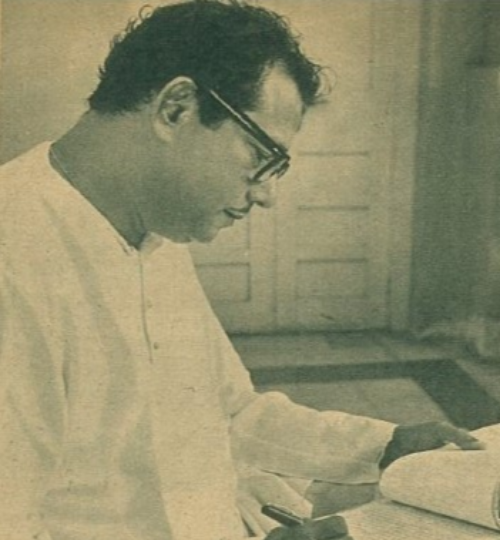
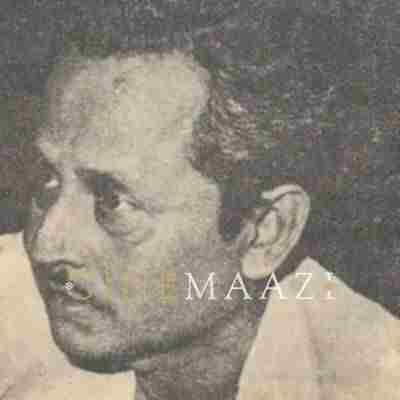
Phani Sarma
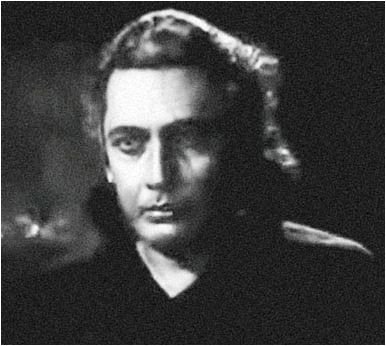
- Born: 1910 (Tezpur)
- Died: 31 July 1970 (Assam)
- Primary Cinema: Assamese
Phani Sarma and his contribution to Indian cinema is truly appreciable when his filmmaking is considered in association with his theatre practice, owing to the fact that he was given the title of ‘Natasurya’, or the ‘Sun of Drama’ by the people of Assam. His work is remembered and written about, alongside two of the most influential figures in Assamese cultural history. Jyoti Prasad Agarwala was a playwright, poet and the first filmmaker from Assam, and Bishnu Prasad Rabha was a revolutionary political activist, painter, musician and a performer. Both of them were associated with the Ban Theatre of Tezpur, located in the Sonitpur district of Assam, which was pivotal in the development of modern Assamese theatre. Phani Sarma would later come to be the third member of the canonical triumvirate: Jyoti-Bishnu-Phani associated with this theatre. Phani Sarma took art beyond the realm of entertainment to social critique. His work urged the Assamese people towards a collective cultural consciousness. With people such as Bhupen Hazarika, and Agarwala, he was among the key personalities who remained active in the local committees of the IPTA (Indian People’s Theatre Association) movement in Assam.
Born in 1910 in Tezpur and raised in the cradle of Bana Rangamancha (Ban Theatre), son to Molan Sarma, an already established theatre artist, a young Phani received the necessary upbringing and influences that contributed to honing his latent interest in the performing arts. In his youth, he met some of Assam’s earliest theatre practitioners like Indreshwar Borthakur, Lalit Mohan Chowdhury and Prafulla Barua.
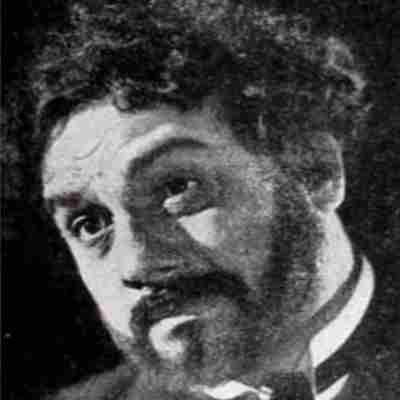
As Bana Rangamancha required performers to be at least 18, Sarma spent his early years as a gatekeeper for the women’s gallery of the theatre, observing and learning the craft. At 16, he began managing stage scenery, until he was old enough to perform. An 18 year old Phani made his acting debut on stage playing the role of Gadapani in Lakshminath Bezbarua's Jaymati Kuwari. Given his tall built and accentuated epic dialogue delivery with his baritone voice, at a time when there were no microphones, he soon became a part of the Kohinoor mobile theatre group that travelled throughout Assam's. Unlike fixed playhouses, mobile theatre groups travel from place to place with their own performers, crew, sets, and technical equipment. His engagement with Kohinoor mobile theatre proved to be a milestone in the history of theatre production as he assisted the organisation in the inclusion of women in theatrical roles for the first time. His acting had a kind of versatility that made it possible for him to play young as well as old roles, comic and complex characters. Sharing insights on his artistic process, he once stated that “When I enter into the stage to play a role, I split myself into two personae. I am the creator, the one who acts is my creation. One is the judge, the other a worker.”
Phani Sarma's play Kiya (Why) is the manifestation of a traumatic personal experience of losing one of his sons and the news of which he received while performing at the stage. The play shows the existential crisis of artists who create works of art but receive little to no recognition or material support to sustain themselves. This play has been adapted into an Assamese film named Keyo (2025) directed by Aparup Agarwala, nephew of Jyoti Prasad Agarwala. Nag-pas is another play about isolation and institutional corruption in the post-independence period marked by disillusionment with the State. He was closely associated with radical theatre and wrote a couple of protest plays. Emuthi Chaul was a translation of Bijon Bhattacharya’s Nabanna. Siraj, Bhogjara, Kola Bazar (Black Market) and MLA among others travelled throughout Assam. He also adapted George Bernard Shaw’s Arms and The Man.
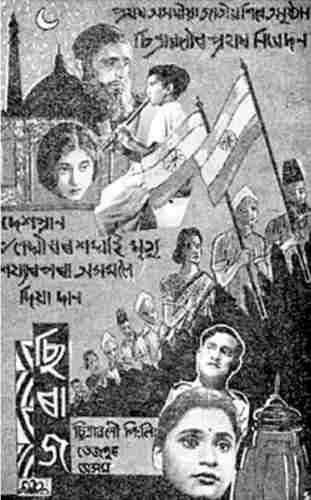
Sarma entered the world of cinema by taking the role of Gathi Hazarika in Jyotiprasad Agarwala's Joymati, the first Assamese film to be made in 1935. His directorial debut was Siraj (1948), a joint venture, with Bishnu Prasad Rabha, adapted from Lakshidhar Sharma's short story based on the life of Sirajuddin Ahmed. The story shows prevailing tensions between Hindus and Muslims, thus inciting conversations around secularism, religious and cultural harmony. He also appeared in Indramalati (1939), the second feature film directed by Agarwala. Phani Sarma’s screen performances brought the gravity of Assamese traditional theatre to this new art form, often looked down upon as dishonourable, while successfully mediating the transition from mythological, and folkloric repertoire towards a more socially engaged modern realism.
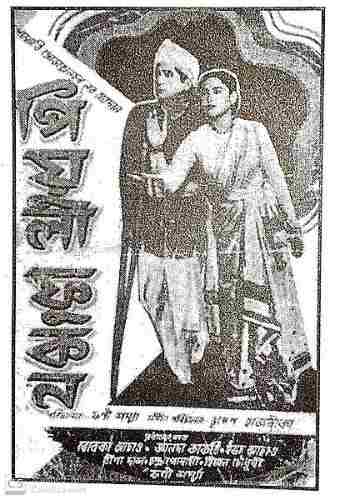
Piyoli Phukan (1955), another film written and directed by Sarma, also featured him in a supporting role. The film is based on the life of Piyoli Phukan, son of Badan Barphukan, whose alliance with the Burmese resulted in the invasion of Assam and the eventual displacement of the ruling Ahom kingdom. Piyoli Phukan martyred himself revolting against the British colonizers. Piyoli Phukan became the first Assamese film to have received the National Film Award for Best Assamese feature film. Later, he directed Puwati Nishar Sapon (1959), Dhumuha (1957), Kecha Son (1959) and appeared in Era Bator Sur (1956), Lachit Borphukan (1961) Itu Situ Bahuto (1963) and Maniram Dewan (1964).
He passed away untimely on 31st July, 1970, at 59 years of age. However his legacy continues to move forward through his life’s work that is all the more relevant today and is central to understanding the evolution of drama and cinema in the region. Sarma’s artistic contributions to theatre and cinema were recognised posthumously in 2004 when the Department of Cultural Affairs of Assam introduced a state-level award titled after him, The Natasurya Phani Sarma Award.
References
“Ban Theatre of Tezpur and the Development of Modern Assamese Theatre.” The Criterion: An International Journal in English, Vol. 10, Issue V, October 2019.
“Phani Sarma: The Sun of Assamese Theatre and Cinema.” Borthakur’s IAS Academy.
“Phani Sarma.” Indian Cine.ma.
Indian Cine.ma – Phani Sarma
“Phani Sarma.” Wikipedia.
Wikipedia – Phani Sarma
“Aparup Agarwala’s Kiyo Revives Phani Sarma’s Legacy, Wins Global Honour in Berlin.” The Assam Tribune.
The Assam Tribune – Phani Sarma / Kiyo
-
Filmography (4)
SortRole
-
Piyoli Phukan 1955
-
Siraj 1948
-

Indramalati 1939
-

Joymoti 1935
-