Some Hopes For The New Year: Lillian
Subscribe to read full article
This section is for paid subscribers only. Our subscription is only $37/- for one full year.
You get unlimited access to all paid section and features on the website with this subscription.
Not ready for a full subscription?
You can access this article for $2, and have it saved to your account for one year.
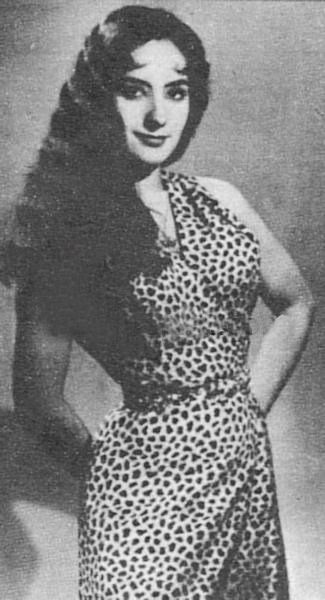
The New Year holds hope of cheer, happiness and prosperity for one and all. To the young dancing starlet Lillian, the New Year will mean much more. It will mark the dawn of a new phase in her career, ushering in an era of success and fame. “I am eagerly waiting looking forward to the new year. I am expecting many big things to happen to me in that year. At any rate, I hope to make big strides in my career in the course of the New Year.”
Who is this promising dancing starlet? If you had seen Bimal Roy’s mystery crime drama Apradhi Kaun?, you wouldn’t have missed the girl who played the vamp. Her role in that film was so vital. That was Lilian and the year was 1957. After two years she staged a real comeback to the screen. What happened to her during the interim period? Thereby hangs a tale but since it is unpleasant one, I would rather refrain from narrating it. Suffice it to say that there was almost a crisis in her domestic life, which prevented her from continuing her career after a spectacular break in Apradhi kaun?.
Tall, slim and lovely, Lillian is a real “oomph” girl with dark pool-like eyes, which attract the attention of those who come in contact with her. She belongs to a respectable Jewish family of Bombay. Her father, Mr. J.S. Ezra, is in the pharmaceutical business while her mother is a great connoisseur of art, particularly talented in the art of painting. Lillian has four younger brothers and one younger sister. She had her education in the Convent of Jesus and Mary, where she studied up to the Senior Cambridge. Although she was a bright student at school, she hated her studies. She was crazy about “English pictures”. The movie-going habit slowly developed in a manner that led her to choose films as a career.
How did it happen? One afternoon when she was idling away at her home, one of her girlfriends, who was working as a film “extra”, took her to Mohan Studios, where Bimal Roy was shooting Yahudi (1958). The latter marked the new arrival on the sets and asked her whether she would care to put on make-up for taking part as one of the “extras”. Promptly she agreed and when Bimal Roy saw the “rushes” of the film, in which she had appeared, the next day, he was so much impressed with her personality that he deleted her bit role in the film and offered her a bigger break in his own production Apradhi Kaun?. Lillian jumped at the offer but when she announced her decision to join the screen to her parents, her father was furious and tried his utmost to dissuade her from joining the movies. But her understanding mother, who knew the aspirations of her daughter, effectively faced her husband’s opposition and helped Lillian accept the offer from Bimal Roy and pursue her career in films.
“My mother”, Lillian said, “has always been extraordinarily kind to me. If she had not been understanding and considerate, I would now be spending one of the most miserable periods of my life. Perhaps, a woman could understand another woman better. That may be the reason why she rallied to my support when I was faced with a problem. My father slowly realized the reasonableness of my mother’s stand and he is now reconciled to my decision to stick to the screen for better or worse. But human as we are, we always hope for better things in life. That’s why my parents and I look forward to the days when I would be acclaimed as a versatile star.”
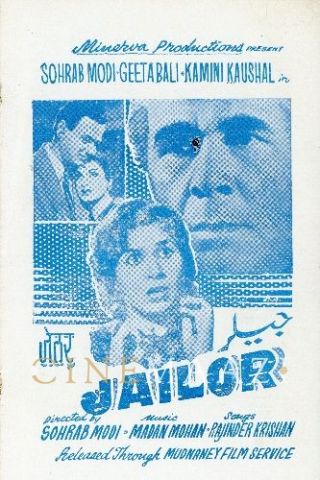
Lillian loves dancing. After Apradhi Kaun?, she danced in three pictures – Jailor (1958), Black Cat (1959), and Guest House (1959). She is eager to develop into a good actress. She says she will leave no stone unturned in making producers of Hindi films realize that she is capable of portraying the typical Indian girl. She has now made good progress in learning Hindustani and classical dancing – Kathak. She is particularly fond of doing emotional dramatic roles. This scribe wished her every luck in the New Year.
Cinemaazi thanks Sudarshan Talwar and Cineplot for contributing this interview which was conducted in 1960 by T.M. Ramachandran
The poster of Jailor is taken from Cinemaazi archive and was not part of the original article.
About the Author
Other Articles by Cinemaazi
Kurosawa the Versatile
Yesterday Tomorrow - Nargis
Britain and the Documentary Film - Marie Seton
Body and Soul of Music
Unforgettable Moments -Nalini Jaywant
Shahenshah (1988) - Preview
रेश्मी सलवार कुरता जाली का : O P Nayyar
Patang (1960) - Picture Preview
All My Christmases- Mala Sinha
हमें तो विछड़ना ही था...Shailendra
Lalita Lajmi on Guru Dutt: Unfinished Symphony
Guru Dutt: The "Typical Hero" Tag Doesn't Fit
Film in Retrospect: Images Images
Hamlet of Films - Guru Dutt
Khuda, Maut aur Ghulam... Guru Dutt
नई शैली निराला संगीत - R D Burman
आर्यसमाजी अध्यापक का बेटा, मैं... Dharmendra
What is a Good Documentary Film?
Salute to an Immortal Spirit
A Painful Parting
Children's Film Society
Let's Give the Kids a Chance
Directing the Child Actor
Chandu - The Elephant Boy
HEROISM-Children's Film Society gives the lead
Munna
ख्वाजा अहमद अब्बास का पत्र महात्मा गांधी के नाम
Shakti Kapoor: It's Three Punches A Day
Should a Filmmaker be Original?
Babita My First Screen Love
Phir Wohi Dil Laya Hoon
Romance in Our Cinema
The Romance of our Show Houses
Kashmir Ki Kali (1964)
Sangam (1964)
This thing called Love
Gandhi: Whose voice?
"Deewar" Becomes a Nation's Prayer
Mangal Pandey
History of Cinema, History of the Nation
Birbal Paristan Mein
Reincarnation... the story goes on ever after
The Film Director?
M Sadiq
The Social Role of the Cinema
"Samaj" A Memorable Film with Popular Appeal
"Two Eyes" in Hollywood
Do Dooni Chaar
Rafoo Chakkar
Johnny Walker.... still going strong
Mahabharat : Epic Tamasha
Narsi Bhagat : An Excellent Biography
Nav Ratri
एक ताजगी का नाम है देवानन्द (Dev Anand)
जे बी एच वाडिया (J B H Wadia) - वचन न जाए
Children's Films in India
Horses .... Cars and Laughs-Mehmood
हिन्दी फिल्मों की दुर्दशा का जिम्मेदार कौन?
क्या हिंदी फिल्मों से हास्य गायब हो रहा है?
हास्य की परंपरा और हास्य अभिनेताओं की भूमिका
प्राण (Pran) और उनकी दाढ़ियाँ
Odds Against a New Comer
Speaking of Portraits and People
An Actor Prepares
Producers' War on Dubbed Films
Jottings from a Film Director's Notebook
प्रेमचंद सत्यजीत राय और ’सद्गति’ -गिरिजाशंकर
Rewind 1990 Commerce of Love Stories
Eastern Scene: Cinema of Surviving Faith
Movie Memories : Tansen (1943)
Movie Memories: Sikandar (1941)
Towards A Brighter Future- Bengali Cinema
The Enigma Of A Flux - Malayalam Cinema
The seesaw graph of Hindi filmdom
Ankahee: The Unspoken
The Mahatma Returns: World Press Reaction
Children’s Films
Telugu Cinema in 1986- Sons and Fathers
Mukhamukham : Face to Face
Tarang : Wages and Profits
Design In Indian Cinema
Movie Memories : Savkari Pash
Double Trouble: Role of Twins In Hindi Cinema
Prem Chopra: The Same Role For Ever
Kalyan Kumar - Karnataka’s Self-Made Star
Ceylon's Cyclonic Cinema
Movie Memories : Aladdin & the Wonderful Lamp
Kumari Padmini: Rising New Star Of The South
50 YEARS OF MALAYALAM CINEMA
Alakh Niranjan: Film India Review
Party: The Story of Choices
The Naushad Era In Hindi Film Music
A Man: Amitabh Bachchan -Amitabh, is My Name
A Man: Amitabh Bachchan - Two of a Kind
Women In Hindi Films : Dichotomy of Values
A Man: Amitabh Bachchan - Yesterday and Tomorrow
Cinema in the South: Crisis of Character
Film Societies Play Their Part
Nutan : A Flashback - The Actress
"Gwalan" Proves A Thrilling Entertainment !
Rajesh Khanna : Echoes Of An Era- Family Of Four
Holi: A Metaphor for Horizontal Violence
A Summon for Mohan Joshi
Nutan : A Flashback - The Friend
Raj Kapoor Scores Personal Triumph In “Aag”!
Smita Patil's Memoir- Trading Places
Shashi Kapoor: Once Upon A Time- The Film Makers
Rajesh Khanna : Echoes Of An Era- Peer Pressures
“Lal Haveli”- Crude But Entertaining!
Nutan : A Flashback - The Wife
Rajesh Khanna : Echoes Of An Era
"Lalkar" Presents Cheap Entertainment
Smita Patil's Memoir-Comrades In Arms
Shashi Kapoor: Once Upon A Time- Unjinxed
Ek Din Ka Sultan- Becomes Good Entertainer !
Smita Patil's Memoir- Friendly Strokes
Shashi Kapoor: Once Upon A Time- Tough Times
The Technician And His Problems
We Must Inject Dynamism Into Publicity
The Role Of Film Finance Corporation
Progress In Raw Film
Freedom In Films
Export Market For Indian Films
The Growth of The Motion Picture
Setup Of The Film Industry
Few Facts About Film Production
Personalisation In Cinema
Waiting for a Doyen's Glance- Arati Bhattacharya
कौन सुनेगा इन सिसकती बिलखती प्रतिभाओं का विलाप?
Asrani - Laugh And The World Laughs With You
My Memorable Roles- Hiralal
राजीव गोस्वामी - कहां थे अब तक 'पेंटर बाबू'?
जब नफरत से बेड़ा पार हो गया: बलराज साहनी
The Case of Emotional Turmoil In Dopatta (1952)
The Story Of A Child Artiste - Sheela Kashimiri
Afsana Likh Rahi Hoon : Tun Tun
Joru Ka Bhai: A Tale of 'Atithi Tum Kab Jaoge'
अभिनेता प्रेमअदीब से भेंट
Vijaylaxmi: A Career As The 'Other' Woman
Shaminder: The Actor Who Had High Hopes
धर्मेन्द्र - समय आ रहा है...
Film Life After Fifty : Motilal
प्रसिद्ध फिल्म लेखक गुलशन नंदा से आपकी बातचीत
"I live on hope"- Kumkum
Thehr Zara O Jane Wale : Madhubala Jhaveri
Ratnamala Attracts Attention In ‘Station Master’
Ghory: The Laurel Of Indian Cinema's Comedy Duo
Yeh Teri Saadgi, Yeh Tera Baankpan: Usha Khanna
सेनापति शेट्टी
कृतिदेव यहां मैं, तनूजा, स्वीकार करती हूँ
मै उर्मिला को भूल नहीं पाती - मंजरी
बुलबुल बंगाल की: चंद्राणी मुखर्जी
Payyal's Lucky Break
These Foreign Producers
The Practical Actress: Shabnam
“Amrit” Becomes A First Class Picture
फिल्मी मारपीट के गुरू : अजीम भाई
From Poverty to Screen Fame - Mehboob Khan
Humility: Nasreen's Most Admirable Feature
A Mercenary Comes To India - Bob Christo
Dilip Kumar: The Leader
Alam Ara: Ardeshir Irani's Ambitious Secret
I Serve My Art- Kanan Devi
Pran: The Pillar of Hindi Cinema
social media
Released in 1986, Jaanbaaz remains one of the most stylish and ambitious films of 1980s Hindi cinema. Produced and directed by Feroz Khan, the film blended family drama, romance, action, and crime within a visually lavis...
View on Facebook
Mumtaz Shanti remains one of the most luminous stars of 1940s Indian cinema and is often remembered as Hindi cinema’s first true female superstar. Celebrating her birth centenary is an occasion to revisit the extraordina...
View on Facebook
See posts, photos and more on Facebook.
View on Facebook