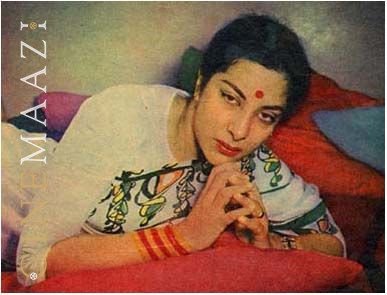
Unforgettable Moments -Nalini Jaywant
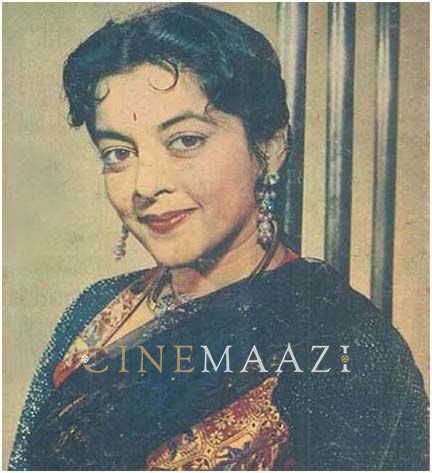
Subscribe to read full article
This section is for paid subscribers only. Our subscription is only $37/- for one full year.
You get unlimited access to all paid section and features on the website with this subscription.
Not ready for a full subscription?
You can access this article for $2, and have it saved to your account for one year.
"If I had my way I would forget the sad moments of my life and cherish only the happy ones."
My life is like a rich fabric woven with incidents– happy and sad, sparkling with laughter and filled with tears. The surface of the fabric is patchy. Some portions of it are as good as new, so vivid they are. Others are faded and old, for their substance has retreated down the dusty corridors of memory.
Remembering is not a matter of volition–one cannot choose what one would like to remember and what one would like to forget. The most trivial incident has a knack of cropping up unexpectedly.
But if I had my way I would like to remember only the happy moments of my life and forget the sad ones. It is said: "Laugh and the world laughs with you; cry and you cry alone."
I am tolerant and forgiving, and I am inclined to accept anything that befalls me with resignation. I am not one of those who make a show of their grief before people who are likely to be impatient about it.
My earliest memories are of my mother, who died recently. We loved each other deeply. I will never forget the night she woke suddenly in the middle of the night and shook me awake. I was seven at the time.
"Are you all right?" she asked anxiously, touching my head, feeling me. I was sleeping beside her.
She had had a bad dream in which she saw that I was involved in a terrible accident. The dream was so vivid that even when she awoke and saw me beside her, she could not quite believe that no harm had befallen me. I was struck by her anxiety and deep love for me.
As a little girl, I was very fond of singing and dancing, and some early memories are of incidents which concern my proficiency in them. At the age of six or seven I took part in the very first Children's Programme broadcast over All India Radio. I sang in that programme and won the first prize for my singing.
A year later I took part in a fancy-dress competition organised by the Sudharna Sangh. The competition was held at the Cowasji Jehangir Hall and was presided over by Mr B G Kher. Dressed as a gypsy, I approached him shyly and offered him a copy of the Programme. That evening I won the first prize and it was a happy moment when I received it from Mr Kher.
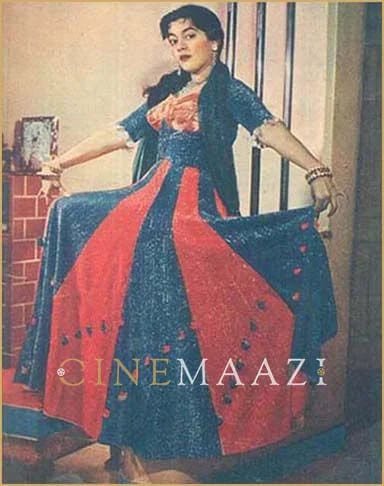
Unlike many other stars, I joined films by chance rather than by design. Although I was good at singing and dancing, I had no intention of becoming an actress. But during a school vacation a producer asked my father to let me work in a devotional film. My father agreed, thinking I could spend the holidays usefully.
I was the pet of the family, and had never been scolded even by my parents. Therefore, the first time I was scolded was to me a moment of extreme humiliation-more so because I was scolded in the presence of so many people!
I was working in my second or third film. That day, a shot was not working out to the director's satisfaction. He suddenly lost his temper and began to shout at me. He ridiculed me, saying I did not know how to act, or speak my lines! I was so humiliated. I bit my lip to check my tears.
I was hurt and I was angry too. But I put over a good performance and the shot turned out to be the best in the film. The moment I got home in the evening I wept bitterly, but I had my parents to console me.
I remember an amusing incident which happened in London. I had gone there with Producer-director S K Ojha for the shooting of "Naaz".
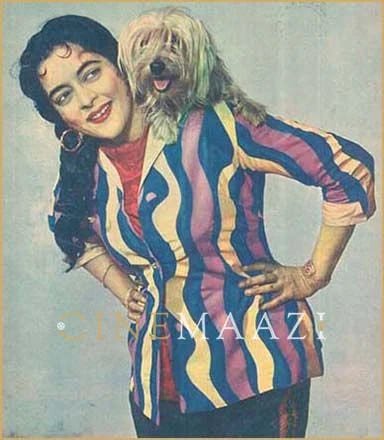
I was fascinated by London and thought it would be a good idea to see the big city from the upper deck of a bus. So I boarded a bus and took a seat. The conductor approached me and asked me where I wanted to go. I told him and gave him the money. He gave me the change-more than was due to me! In a moment I learnt the reason. He gave me a "half ticket! I didn't know whether to feel surprised, embarrassed, or take it as a compliment!
From London, the unit went to Cairo, and I with it. Between spells of shooting we went sight-seeing. On one occasion we visited a mosque. I saw a handful of people coming out of it. Seeing me, they stopped.
"You are an Indian?" one of them asked.
"Yes," I said. "Why?"
I must also tell you about a disaster which was averted. We were location shooting at Bassein for "Bharti. For the scene Ajit, my co-star, and I were to swim towards a boat. In another boat were the camera and crew. As soon as the camera was switched on, Ajit and I jumped into the sea. The sea was rough, and we were being carried further away from the boat towards which we were swimming. I was numb with fear and felt certain that death was at hand. Fortunately, two fishermen, who were in a boat some distance away, saw my plight and swam to my rescue.
I will never forget the three years during which I did not work in any film. It was in "Samadhi" that I staged a come-back and everybody had taken for granted that my career in films was over. It was a time of trial and frustration. Offers were made to me for featured and minor roles. But I refused them all.
My self-confidence was at its lowest ebb when "Samadhi" came along. When I reported for work, it was as if I had awakened from a long sleep. I felt as though I was starting all over again, like an artist new to films. I will never forget the first two days on the sets. I was getting more and more worried. Was my work bad? Had I lost the "feel" of acting? Why was everybody so glum and unresponsive and silent? No one on the set had a word of encouragement for me. I was convinced they thought my work was below the mark. They had not seen the rushes. When they did, their faces were wreathed in smiles. They said, "Nalini, you're wonderful!"
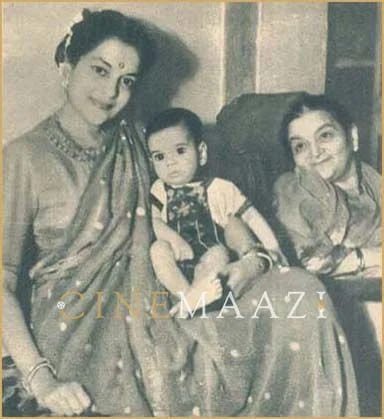
In my entire career, it was the most sorely-needed praise.
During the making of "Samadhi," a night shooting session went on till four o'clock in the morning. I was about to get into my car when something "stung" me in my ankle. Bending down, I touched my ankle, and saw blood on my fingers! At once, I began to cry: "Snake! Snake! I've been bitten! I'm dying!"
Everyone from the studio came running, flashing torches and looking for the reptile.
They found instead an old, rusty wire which had pricked me! As soon as I saw it, I burst out laughing. I learnt that fear, more than poison, can kill people, and that he who conquers fear conquers evil.
I am reminded of the operation I underwent a few months ago. Fear of death was present only so long as I was conscious. Once the chloroform began to act and I drifted into unconsciousness, fear ceased to exist. Then, when it was all over and I came to, it seemed as though nothing had happened. "Why, it was nothing. Why was I so afraid?" I asked myself. Nevertheless, one of my greatest moments of happiness was when I fully returned to consciousness.
I do not think sensitive people who nurse their sorrows are wise in laying their hearts bare to their friends, for I sincerely believe that friends are not as interested or sympathetic as they seem to be. I have had my share of sorrows in life, sorrows about which I do not like to speak, much less write. I prefer to dismiss them, or relegate them to the back benches of remembrance with a philosophic shrug.
This article was published in 'Filmfare' magazine's 31 January 1958 edition.
About the Author

Other Articles by Cinemaazi
Kurosawa the Versatile
Yesterday Tomorrow - Nargis
Britain and the Documentary Film - Marie Seton
Body and Soul of Music
Shahenshah (1988) - Preview
रेश्मी सलवार कुरता जाली का : O P Nayyar
Patang (1960) - Picture Preview
All My Christmases- Mala Sinha
हमें तो विछड़ना ही था...Shailendra
Lalita Lajmi on Guru Dutt: Unfinished Symphony
Guru Dutt: The "Typical Hero" Tag Doesn't Fit
Film in Retrospect: Images Images
Hamlet of Films - Guru Dutt
Khuda, Maut aur Ghulam... Guru Dutt
नई शैली निराला संगीत - R D Burman
आर्यसमाजी अध्यापक का बेटा, मैं... Dharmendra
What is a Good Documentary Film?
Salute to an Immortal Spirit
A Painful Parting
Children's Film Society
Let's Give the Kids a Chance
Directing the Child Actor
Chandu - The Elephant Boy
HEROISM-Children's Film Society gives the lead
Munna
ख्वाजा अहमद अब्बास का पत्र महात्मा गांधी के नाम
Shakti Kapoor: It's Three Punches A Day
Should a Filmmaker be Original?
Babita My First Screen Love
Phir Wohi Dil Laya Hoon
Romance in Our Cinema
The Romance of our Show Houses
Kashmir Ki Kali (1964)
Sangam (1964)
This thing called Love
Gandhi: Whose voice?
"Deewar" Becomes a Nation's Prayer
Mangal Pandey
History of Cinema, History of the Nation
Birbal Paristan Mein
Reincarnation... the story goes on ever after
The Film Director?
M Sadiq
The Social Role of the Cinema
"Samaj" A Memorable Film with Popular Appeal
"Two Eyes" in Hollywood
Do Dooni Chaar
Rafoo Chakkar
Johnny Walker.... still going strong
Mahabharat : Epic Tamasha
Narsi Bhagat : An Excellent Biography
Nav Ratri
एक ताजगी का नाम है देवानन्द (Dev Anand)
जे बी एच वाडिया (J B H Wadia) - वचन न जाए
Children's Films in India
Horses .... Cars and Laughs-Mehmood
हिन्दी फिल्मों की दुर्दशा का जिम्मेदार कौन?
क्या हिंदी फिल्मों से हास्य गायब हो रहा है?
हास्य की परंपरा और हास्य अभिनेताओं की भूमिका
प्राण (Pran) और उनकी दाढ़ियाँ
Odds Against a New Comer
Speaking of Portraits and People
An Actor Prepares
Producers' War on Dubbed Films
Jottings from a Film Director's Notebook
प्रेमचंद सत्यजीत राय और ’सद्गति’ -गिरिजाशंकर
Rewind 1990 Commerce of Love Stories
Eastern Scene: Cinema of Surviving Faith
Movie Memories : Tansen (1943)
Movie Memories: Sikandar (1941)
Towards A Brighter Future- Bengali Cinema
The Enigma Of A Flux - Malayalam Cinema
The seesaw graph of Hindi filmdom
Ankahee: The Unspoken
The Mahatma Returns: World Press Reaction
Children’s Films
Telugu Cinema in 1986- Sons and Fathers
Mukhamukham : Face to Face
Tarang : Wages and Profits
Design In Indian Cinema
Movie Memories : Savkari Pash
Double Trouble: Role of Twins In Hindi Cinema
Prem Chopra: The Same Role For Ever
Kalyan Kumar - Karnataka’s Self-Made Star
Ceylon's Cyclonic Cinema
Movie Memories : Aladdin & the Wonderful Lamp
Kumari Padmini: Rising New Star Of The South
50 YEARS OF MALAYALAM CINEMA
Alakh Niranjan: Film India Review
Party: The Story of Choices
The Naushad Era In Hindi Film Music
A Man: Amitabh Bachchan -Amitabh, is My Name
A Man: Amitabh Bachchan - Two of a Kind
Women In Hindi Films : Dichotomy of Values
A Man: Amitabh Bachchan - Yesterday and Tomorrow
Cinema in the South: Crisis of Character
Film Societies Play Their Part
Nutan : A Flashback - The Actress
"Gwalan" Proves A Thrilling Entertainment !
Rajesh Khanna : Echoes Of An Era- Family Of Four
Holi: A Metaphor for Horizontal Violence
A Summon for Mohan Joshi
Nutan : A Flashback - The Friend
Raj Kapoor Scores Personal Triumph In “Aag”!
Smita Patil's Memoir- Trading Places
Shashi Kapoor: Once Upon A Time- The Film Makers
Rajesh Khanna : Echoes Of An Era- Peer Pressures
“Lal Haveli”- Crude But Entertaining!
Nutan : A Flashback - The Wife
Rajesh Khanna : Echoes Of An Era
"Lalkar" Presents Cheap Entertainment
Smita Patil's Memoir-Comrades In Arms
Shashi Kapoor: Once Upon A Time- Unjinxed
Ek Din Ka Sultan- Becomes Good Entertainer !
Smita Patil's Memoir- Friendly Strokes
Shashi Kapoor: Once Upon A Time- Tough Times
The Technician And His Problems
We Must Inject Dynamism Into Publicity
The Role Of Film Finance Corporation
Progress In Raw Film
Freedom In Films
Export Market For Indian Films
The Growth of The Motion Picture
Setup Of The Film Industry
Few Facts About Film Production
Personalisation In Cinema
Waiting for a Doyen's Glance- Arati Bhattacharya
कौन सुनेगा इन सिसकती बिलखती प्रतिभाओं का विलाप?
Asrani - Laugh And The World Laughs With You
My Memorable Roles- Hiralal
राजीव गोस्वामी - कहां थे अब तक 'पेंटर बाबू'?
जब नफरत से बेड़ा पार हो गया: बलराज साहनी
The Case of Emotional Turmoil In Dopatta (1952)
The Story Of A Child Artiste - Sheela Kashimiri
Afsana Likh Rahi Hoon : Tun Tun
Some Hopes For The New Year: Lillian
Joru Ka Bhai: A Tale of 'Atithi Tum Kab Jaoge'
अभिनेता प्रेमअदीब से भेंट
Vijaylaxmi: A Career As The 'Other' Woman
Shaminder: The Actor Who Had High Hopes
धर्मेन्द्र - समय आ रहा है...
Film Life After Fifty : Motilal
प्रसिद्ध फिल्म लेखक गुलशन नंदा से आपकी बातचीत
"I live on hope"- Kumkum
Thehr Zara O Jane Wale : Madhubala Jhaveri
Ratnamala Attracts Attention In ‘Station Master’
Ghory: The Laurel Of Indian Cinema's Comedy Duo
Yeh Teri Saadgi, Yeh Tera Baankpan: Usha Khanna
सेनापति शेट्टी
कृतिदेव यहां मैं, तनूजा, स्वीकार करती हूँ
मै उर्मिला को भूल नहीं पाती - मंजरी
बुलबुल बंगाल की: चंद्राणी मुखर्जी
Payyal's Lucky Break
These Foreign Producers
The Practical Actress: Shabnam
“Amrit” Becomes A First Class Picture
फिल्मी मारपीट के गुरू : अजीम भाई
From Poverty to Screen Fame - Mehboob Khan
Humility: Nasreen's Most Admirable Feature
A Mercenary Comes To India - Bob Christo
Dilip Kumar: The Leader
Alam Ara: Ardeshir Irani's Ambitious Secret
I Serve My Art- Kanan Devi
Pran: The Pillar of Hindi Cinema
.jpg)

social media

Released in 1986, Jaanbaaz remains one of the most stylish and ambitious films of 1980s Hindi cinema. Produced and directed by Feroz Khan, the film blended family drama, romance, action, and crime within a visually lavis...
View on Facebook
Mumtaz Shanti remains one of the most luminous stars of 1940s Indian cinema and is often remembered as Hindi cinema’s first true female superstar. Celebrating her birth centenary is an occasion to revisit the extraordina...
View on Facebook
See posts, photos and more on Facebook.
View on Facebook