
Subscribe to read full article
This section is for paid subscribers only. Our subscription is only $37/- for one full year.
You get unlimited access to all paid section and features on the website with this subscription.
Not ready for a full subscription?
You can access this article for $2, and have it saved to your account for one year.
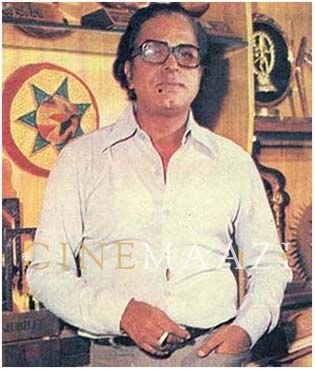
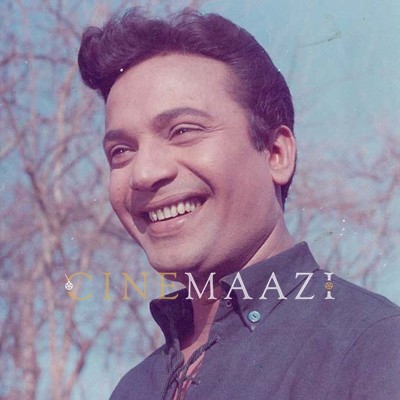
He walked up the stage, a slim, sprightly man... His immaculate clothes were lit up by the footlights... He smiled as the audience burst into an ovation. "Here's Johnny Walker," someone whispered. "Now, we'll have some good fun," said someone else. "He always makes us laugh,'' said a third...
I stood near the footlights waiting for the ovation stop and, when it did, even heard snatches of the complimentary remarks. It seemed to me that they neatly summed up my achievements, and were a tribute to my long struggle and effort.
But who could imagine that the boy who peddled ice-candy on the dusty roads of Nasik would ever rise to such "starry" heights, or expect that an ex-bus conductor would reach so happy a journey's end?
Yet it came to pass with the certainty of destiny, just as my father had been destined to lose his job and the entire family of ten thrown on the rocks of destitution.
How well I remember the day we had to leave our home town, Indore, and migrate to Nasik. I was barely fourteen, but old enough, by the standards of poverty, to become the mainstay of the family.
School? I could not afford such a luxury. Being the eldest son, I had to shoulder the responsibility of making both ends meet.
Fortunately, I was not ashamed of any kind of work. I did not know the term "dignity of labour", but I certainly understood its spirit. I think it was this understanding that enabled me to tackle any mode of making a living, so long as it was an honest one.
Cycling nine miles daily to Deolali to sell ice-candy, I also devised ways and means to augment my slender income. In my spare time I began to sell other things—crockery, kites, poultry, eggs, fish, meat, vegetables, cutlery and stationery. During the season, I sold a big basket of mangoes every day in front of our house.
My trade thrived, but the fact that I was the main supporter of the family did not prevent my parents from scolding me sometimes.
When we moved to Igatpuri, my father asked me to work in the railway. It was his idea of secure, respectable employment. I got a job in the railway—that of making bamboo curtains at a daily wage of seven annas and two pice.
I also worked as a bus conductor in the B.E.S.T. and gave it up after two years.
But all these hardships were a preparation. They hardened me for the set-backs I received during the early part of my film career. Although joined films as a last resort to earn enough money, I had always been interested in films and idolised the heroes of stunt pictures. So, when I was offered bit roles in Sheikh Mukhtar's "Dada" and K Asif's "Hulchul," I was naturally quite elated.
Then I got an important part in "Aandhiyan". It was the first of my many "sharabi" roles. But though my performance won plaudits, my name never appeared in the credit titles!
About this time I met Guru Dutt—in a very curious way. It is even regarded as a famous encounter! Pretending to be drunk, I managed to enter his office and in the end secure a major role in his film 'Taxi Driver," which became a hit.
But for five long years it had been a hard struggle—taking up small or part-time jobs to keep the home fires burning.
Talking of those days reminds me of an amusing incident. I had paid a short visit to Indore. Returning laden with goods which I hoped to sell in Bombay at a profit, I found on the train that my pocket had been picked! Along came the ticket-collector at Ratlam. I had to get off the train, sell my goods and with the proceeds pay the amount due.
Thinking of some of these fragments from the past, as I stood near the footlights, I felt that my life certainly had been a hard one, but the trials I had faced had disciplined me and made me respect hard work and, above all, had given me an understanding the true values of life.
Newcomers to films often seek my advice and ask me what the secret of my success is. Acting has no magic formula, I tell them. Success comes after infinite struggle and patience. The actor, too, must have certain qualifications—talent, understanding, courage and presence of mind.
I think one cannot be a good actor unless one has passed through the furnace of life's vicissitudes. My own screen work has benefited immensely from my varied experiences, hardships and privation. Films mirror life and, unless one has experienced defeat, disappointment and frustration, one cannot depict them authentically on the screen.
As long as people want to laugh, I will be there to make them laugh. Laughter is like a tonic, and l consider myself fortunate in that I can provide so much of it.
This article was published in 'Filmfare' magazine's 20 November 1959 edition.
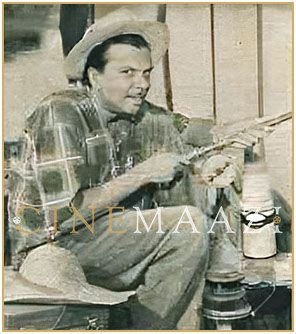
The image appeared is from the orginal article.
About the Author